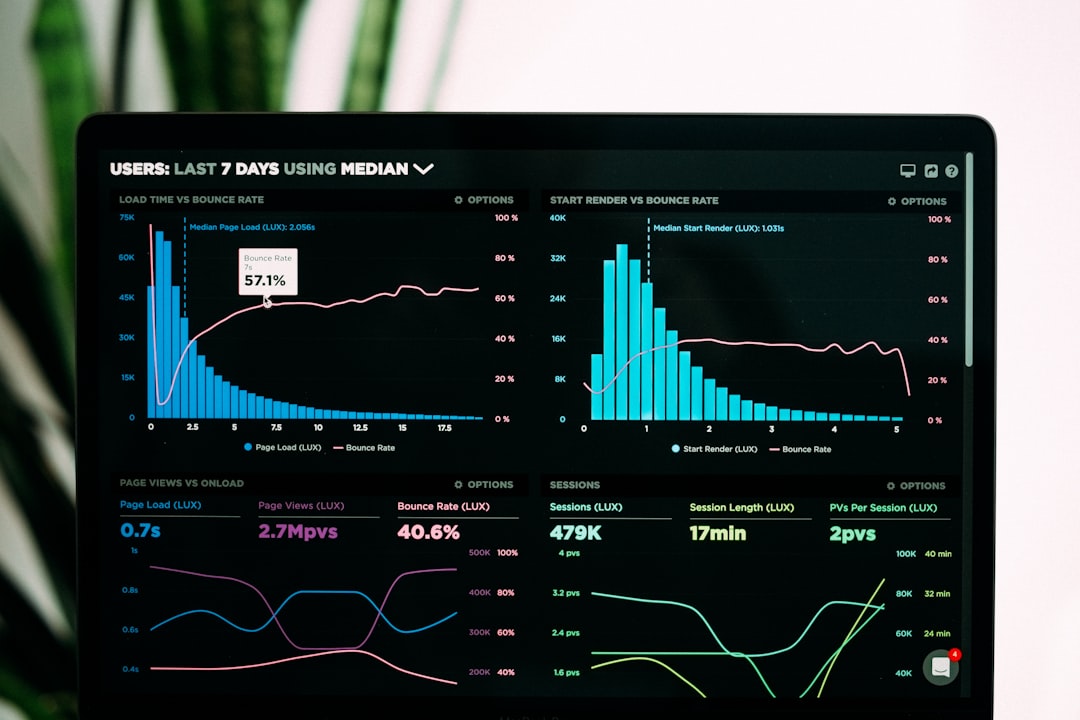
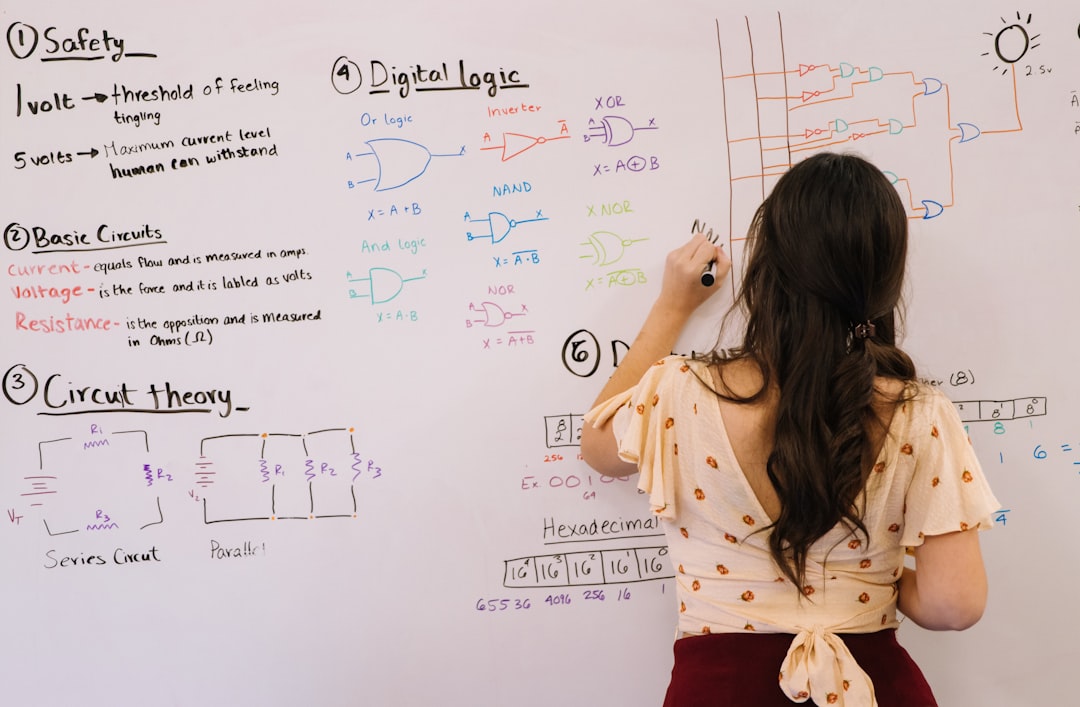
Would you turn down $10,000 in cash, unlimited Claude AI credits, and a personalized business coach — all for free? That question stopped me cold when I read the Workday Foundation press release on May 12. Together with Anthropic and the Local Initiatives Support Corporation (LISC), they just launched a solopreneur accelerator program that backs 15 solo founders with real capital, real AI tools, and a curriculum built specifically for one-person businesses. According to a 2026 SBA report, 82% of U.S. small businesses operate without employees. If you are one of them — or want to be — this might be the most relevant funding opportunity of the year. I know because I spent three years building a solo cosmetics export operation with zero external funding, and a program like this would have cut my learning curve in half.
In This Article
- What the Workday Anthropic Solopreneur Accelerator Actually Offers
- Who Qualifies and How to Position Your Application
- How Free Claude Credits Change the Solo Founder Playbook
- Curriculum Breakdown: AI Skills for Real Business Operations
- How This Stacks Up Against Other Solopreneur Programs
- 6 Action Steps Before the July 2026 Cohort Opens
- My Take: What I Wish I Had When Starting Solo
- Frequently Asked Questions
What the Workday Anthropic Solopreneur Accelerator Actually Offers
Strip away the press-release language and here is what you actually get. The Workday Foundation Solopreneurship Accelerator Program, announced May 12, 2026, pairs three organizations with distinct roles. Workday Foundation provides the $150,000 in total grant funding ($10,000 per founder). Anthropic supplies Claude AI credits at no cost. LISC delivers the curriculum and one-on-one coaching through their national network of Business Development Organizations.
The initial cohort takes 15 aspiring solopreneurs. Not established businesses — aspiring ones. That distinction matters because most accelerators want traction metrics you do not have yet when you are starting from scratch. Here, the barrier sits lower. You bring a business idea and the willingness to learn. They bring the money, tools, and guidance.
Dario Amodei, Anthropic’s CEO, has predicted publicly that 2026 could produce the first billion-dollar solopreneur. Whether or not you believe that timeline, the investment signals where corporate money is flowing: toward solo operators who treat AI as infrastructure rather than novelty. And the fact that Anthropic is putting their own AI credits on the line tells you they think Claude can genuinely power a solo business — not just generate blog posts.

Who Qualifies and How to Position Your Application
LISC operates in underserved communities across the United States. Their Business Development Organizations serve as the gatekeepers for this solopreneur accelerator program. If you live near a LISC-affiliated BDO — and there are hundreds — you have a shot. The program explicitly targets people who want to build and scale small businesses using AI but have not had access to resources or mentorship.
What does “aspiring solopreneur” actually mean? Based on the announcement, you do not need an existing LLC or revenue. You need a business idea and the willingness to go through an AI-focused curriculum. That is different from, say, the Zoom Solopreneur 50, which required applicants to already run a one-person business.
Here is what I think will make applications stand out. First, specificity. Do not write “I want to start an e-commerce business.” Write “I want to launch a direct-to-consumer skincare brand targeting the Korean beauty export market using Claude for supplier communication and inventory forecasting.” Second, demonstrate that you already understand the AI opportunity — even if you have not used the tools yet. Talk about the specific workflows you plan to automate.
Third, show community impact. LISC cares about underserved communities. Your application should connect your business to the people around you. A freelance graphic designer serving local restaurants scores higher than a generic “digital marketing agency” pitch. Fourth, be honest about your gaps. The program exists to teach you — admitting what you do not know signals coachability, which matters more than pretending you have it figured out.
How Free Claude Credits Change the Solo Founder Playbook
This part excited me most. Anthropic’s Claude is not cheap when you use it at scale. The Pro plan runs $20/month for individuals, but real agentic workflows — the kind that can replace a virtual assistant — burn through API credits fast. One solo founder I spoke with last month spends $340/month on Claude API calls alone for his customer support automation.
Free Claude credits remove the biggest constraint solo founders face when experimenting with AI: the fear of wasting money on prompts that do not work. When credits are unlimited, you can afford to fail fast. Try ten different approaches to your email marketing copy. Build three competing customer onboarding flows. Test whether Claude can handle your bookkeeping categorization before you commit to a paid accounting tool.
The 2026 McKinsey AI adoption report found that high-performing solopreneurs using AI outpace their peers by 2.3x in revenue growth. But most solo operators never reach that level because they ration their AI usage. Free credits solve the rationing problem completely. You stop asking “is this prompt worth $0.15?” and start asking “what can I build today?”

Specifically, here is what unlimited Claude access enables for a solo founder. Automated customer email responses that actually sound human and adapt to each customer’s tone. Contract drafting and review without a $300/hour lawyer — I tested this with my own supplier agreements and Claude caught two liability clauses I missed. Market research reports generated from raw data in minutes instead of the 6 hours I used to spend compiling them manually. Product descriptions written in multiple languages for export markets (my Korean and Japanese product listings went from clunky to natural overnight). And financial forecasting based on your actual transaction history, not generic templates.
The difference between paying for Claude and getting it free is not just financial. It is psychological. When you know every prompt costs money, you self-censor. You write shorter prompts. You skip experiments. You settle for the first decent output instead of iterating until the output is great. Free credits unlock the experimental mindset that separates AI-fluent founders from AI-curious ones.
Curriculum Breakdown: AI Skills for Real Business Operations
The solopreneur accelerator program’s curriculum focuses on five operational pillars. Strategy. Marketing. Fulfillment. CRM. Financial management. Each module teaches participants how to use generative AI specifically for that function — not general “here’s how ChatGPT works” content, but operational playbooks you can apply to your business the same week you learn them.
I find this approach smarter than most AI courses sold online for $997. They skip the technology explanation and go straight to “here is how you use this to run your actual business.” The difference between knowing what AI can do and knowing how to make it do your work is enormous. I wasted six months in 2023 experimenting with ChatGPT for my export business before I found workflows that actually saved time rather than adding a new tool to babysit.
LISC’s BDO coaches add another layer that online courses cannot match. You are not just watching videos. You have someone reviewing your AI implementations, catching mistakes, and suggesting improvements specific to your business model. That human feedback loop matters because AI tools give you capabilities but not judgment. A coach tells you which capabilities to prioritize this week and which ones are distractions.
| Module | AI Application | Expected Outcome |
|---|---|---|
| Strategy | Market analysis, competitor research, business model canvas generation | Clear positioning within 2 weeks of starting |
| Marketing | Content creation, ad copy, email sequences, social scheduling | Fully automated content pipeline producing daily output |
| Fulfillment | Order processing, supplier communication, inventory alerts | 80% fewer manual touchpoints per order |
| CRM | Lead scoring, follow-up automation, customer segmentation | Zero leads falling through cracks in your pipeline |
| Finance | Bookkeeping categorization, cash flow forecasting, invoice generation | Monthly close completed in under 1 hour |
How This Stacks Up Against Other Solopreneur Programs
Three programs now compete for the solo founder’s attention in 2026. Let me break them down honestly so you can decide which one fits your situation.
The Zoom Solopreneur 50 awarded $30,000 grants to 5 winners from nearly 3,000 applicants. The money is real, but the odds sit at 0.17%. You also need an existing AI-powered business to qualify. It recognizes success that already happened — it does not help you create it from scratch.
Y Combinator’s solo founder track still requires a functioning product and some level of traction. Their standard deal is $500,000 for 7% equity. Different league, different expectations, different trade-offs. You get more money but you give up ownership and face intense pressure to scale fast.
The Workday/Anthropic accelerator occupies a unique middle ground. Lower dollar amount ($10,000 vs $30,000 or $500,000), but far easier entry requirements. No existing business needed. No equity given up. And the AI credits plus coaching add significant non-cash value that the other programs simply do not match at any price point.
For someone with a business idea but no runway, this solopreneur accelerator program offers the lowest-risk entry point into funded entrepreneurship. You keep 100% ownership, get real money for expenses like domain registration and initial inventory, and gain AI fluency that pays dividends forever regardless of whether this specific business succeeds.
6 Action Steps Before the July 2026 Cohort Opens
The inaugural cohort starts in July 2026. Applications flow through LISC’s BDO network. Here is exactly what I would do if I were applying today.
1. Find your nearest LISC-affiliated BDO. Go to lisc.org and search their partner directory. If there is no BDO in your area, check whether virtual participation is available — the announcement does not specify geographic restrictions beyond “select communities in the United States.”
2. Define one specific business problem AI could solve. Do not say “I want to use AI.” Say “I want to use Claude to automate supplier price negotiations for my wholesale vintage clothing resale business.” Specificity wins every time because it shows you have thought past the buzzwords.
3. Start using Claude’s free tier now. Even without accelerator credits, claude.ai offers a free tier. Build a portfolio of 5-10 prompts that show you understand the tool. Screenshot your results. Attach them to your application as proof of initiative.
4. Draft a 90-day plan. If accepted, what would you accomplish in three months with $10,000 and unlimited AI access? Write it down. Make the milestones measurable. “Launch Shopify store by week 4 with 20 products listed” beats “explore e-commerce options” every single time reviewers are comparing applications.
5. Connect your business idea to community impact. LISC exists to support underserved communities. Your application should explain who benefits beyond you. A neighborhood bakery that uses AI for inventory management and employs two local part-timers tells a stronger story than a remote SaaS business serving global customers with no local footprint.
6. Document your current AI experiments — even failures. Showing that you tried to automate your invoicing with Claude and hit a wall demonstrates both initiative and coachability. The program wants people willing to learn, not people who already know everything. Your failure log is evidence that you take action, which separates you from applicants who only have ideas.
My Take: What I Wish I Had When Starting Solo
I launched my cosmetics export business in 2020 with no accelerator, no mentor, and no AI tools beyond basic Google Translate. The first year was brutal in ways I do not romanticize. I spent 4 hours daily on email correspondence with suppliers across 7 countries because I had no templates, no automation, and no one to tell me a better way existed. My bookkeeping was a spreadsheet disaster that took 12 hours to reconcile each month end.
When I discovered AI tools in late 2023, those 4 hours of email work dropped to 45 minutes. Monthly bookkeeping became a 2-hour task instead of a weekend-ruining ordeal. But getting there required months of trial and error because I had nobody showing me the right workflows. I burned probably $800 on AI subscriptions I barely used before finding my groove — subscriptions to tools that were wrong for my business model but looked amazing in YouTube reviews.
A solopreneur accelerator program like this one would have saved me roughly 6 months and $2,000 in wasted experiments. The coaching alone — having someone say “no, use Claude for this specific task instead of that generic workflow” — would have been worth more than the $10,000 grant to me personally. Because when you are solo, every wrong turn costs double. You waste the time going down the wrong path AND the time recovering from it. A coach shortens both.
The numbers tell the story clearly. Without AI tools, my first year cost roughly $14,000 in outsourced work that I could have done myself with the right guidance and technology access. Two years of supplier emails alone consumed over 2,000 hours of my life — hours that a properly configured Claude workflow now handles in a fraction of the time while I focus on growth decisions that actually move revenue. My honest advice to anyone reading this: if you qualify, apply. Even if you are not sure your business idea is fully baked. The worst outcome is that you learn AI skills for free and meet 14 other founders walking the same path you are. The best outcome is that you launch something real with a $10,000 head start and technology access that your competitors are paying hundreds per month to get a fraction of.
Frequently Asked Questions
What is a solopreneur accelerator program?
A solopreneur accelerator program is a structured support initiative that provides solo founders with funding, tools, training, and mentorship to launch or scale a one-person business. The Workday Foundation program specifically offers $10,000 grants, free Claude AI credits, an AI-focused business curriculum, and coaching through LISC’s Business Development Organizations to 15 aspiring solopreneurs starting July 2026.
Do I need an existing business to apply for the Workday Anthropic accelerator?
No. The program targets “aspiring solopreneurs” who want to build and scale small businesses but have not necessarily started yet. You need a clear business idea and willingness to complete the AI curriculum, but existing revenue or an LLC is not required. This is different from programs like the Zoom Solopreneur 50, which required an existing AI-powered business.
Do I give up equity to participate in this solopreneur accelerator program?
No. The $10,000 is a grant from the Workday Foundation, not a venture capital investment. You retain 100% ownership of whatever you build during and after the program. There are no repayment obligations, equity stakes, or revenue-sharing agreements involved. This makes it fundamentally different from traditional accelerators like Y Combinator.
How do I apply for the Workday Anthropic solopreneur accelerator program?
Applications are routed through LISC’s network of Business Development Organizations. Visit lisc.org to find a BDO near you and inquire about the Workday Foundation Solopreneurship Accelerator Program. The program currently serves “select communities” in the United States, so availability depends on your proximity to LISC partner organizations.
Ready to explore whether this solopreneur accelerator program fits your goals? Start by locating your nearest BDO at lisc.org, then spend this weekend building 5 test prompts in Claude’s free tier. The July cohort fills from a pool of 30 million solo businesses watching the same news you just read — and the ones who apply with documented AI experiments will stand out from everyone who only submits a business plan.