In This Article
- Why AI Marketing Automation Matters for Solo Business Owners in 2026
- My 5-Tool AI Marketing Automation Stack (With Real Costs)
- Setting Up AI Email Campaigns That Actually Convert
- AI-Powered Ad Optimization on a Solo Founder Budget
- Reading the Numbers — AI Analytics for Smarter Marketing Decisions
- What I Learned After 6 Months of AI Marketing Automation
- Frequently Asked Questions
Six months ago, I was spending 20 hours a week on marketing. Writing emails at midnight. Tweaking Facebook ads during lunch. Checking analytics before breakfast. My solo export business was growing, sure — but I was the bottleneck.
Then I rebuilt my entire marketing workflow around AI marketing automation tools. Not the enterprise stuff with five-figure contracts. Affordable platforms built for people like me — solo founders running real businesses without marketing departments.
The result? A 47% revenue increase in 90 days. And I cut my marketing hours from 20 to about 5 per week. That’s not a typo.
This guide is for solopreneurs and one-person business owners who want to stop doing marketing manually. I’ll share the exact tools I use, what worked (and what flopped), and a realistic setup you can copy this week. No fluff, no theory — just what’s actually working in April 2026.

Why AI Marketing Automation Matters for Solo Business Owners in 2026
Marketing used to be something you could handle with a spreadsheet and good intentions. Not anymore. Customer expectations have shifted. People expect personalized emails, targeted ads, and real-time responses — the kind of experience that Fortune 500 brands deliver with 50-person marketing teams.
You don’t have a 50-person team. You have yourself. Maybe a VA for a few hours a week. And that gap between what customers expect and what a solo founder can deliver? AI marketing automation closes it.
According to a 2026 Klaviyo report, marketing teams using AI-powered optimization see 30% higher ROI on advertising spend compared to manual campaign management. For solo operators, that number tends to be even higher because we’re replacing the most repetitive, time-consuming tasks first.
I noticed the difference within two weeks. My email open rates jumped from 18% to 31%. Click-through went from 2.1% to 4.8%. And I wasn’t writing better copy — the AI was simply sending the right message to the right segment at the right time.
But here’s what surprised me most: the time savings compounded. When you’re not manually sorting contacts and scheduling sends, you start thinking about strategy instead. You spot patterns. You test new offers. That’s where the real revenue growth came from — not the automation itself, but the mental bandwidth it freed up.
If you’re still manually managing your marketing as a solo business owner, you’re competing with one hand tied behind your back. And in 2026, you don’t have to.
My 5-Tool AI Marketing Automation Stack (With Real Costs)
I tested over a dozen platforms before landing on this combination. Some were too expensive. Others promised AI features that turned out to be glorified templates. What you see below is what actually stuck after six months of daily use in my solo business.
| Tool | Purpose | Monthly Cost | AI Feature I Use Most |
|---|---|---|---|
| ActiveCampaign | Email & CRM | $49/mo | Predictive sending & smart segmentation |
| AdCreative.ai | Ad copy & creatives | $29/mo | AI-generated ad variations with scoring |
| Jasper | Content & copy | $39/mo | Brand voice matching for blog & social |
| Zapier | Workflow glue | $19.99/mo | AI-powered path routing between tools |
| Plausible Analytics | Privacy-first tracking | $9/mo | Simple dashboards without cookie banners |
Total monthly cost: $145.99. That’s less than what I used to pay a freelancer for 10 hours of marketing work. The difference? These tools run 24/7, they don’t need briefs, and they get smarter over time.
A quick note on what didn’t make the cut: I tried Mailchimp’s AI features and found them too basic for serious segmentation. HubSpot was powerful but priced for teams, not solo operators. And several “AI marketing” startups I tested were just ChatGPT wrappers with a nice dashboard. Be skeptical.
If you’re just starting out, my advice is to begin with ActiveCampaign (or a similar email platform with real AI segmentation). Email delivers the highest ROI per dollar for solo businesses — always has. Layer in the other tools once your email game is solid. You can read more about building a complete solo business toolkit in my Solopreneur Tech Stack 2026 guide.
Setting Up AI Email Campaigns That Actually Convert
Email is where AI marketing automation shines brightest for solo businesses. And I don’t mean “set up an autoresponder and forget it.” I mean genuine, behavior-driven sequences that feel like one-on-one conversations.
My setup inside ActiveCampaign uses three automation types that generate about 60% of my monthly revenue:
1. Welcome sequence with dynamic branching. When someone joins my list, the AI tracks which links they click in the first two emails. Clicked a pricing link? They get a case study email next. Clicked a how-to article? They get an educational drip instead. I set this up once. It runs every day without me touching it.
2. Re-engagement campaigns triggered by inactivity. If a subscriber hasn’t opened an email in 30 days, the system automatically sends a personalized “We miss you” message with their most-viewed product category. Before I had this, I was losing 15-20% of my list every quarter to silent churn. Now that number is under 8%.
3. Post-purchase upsell sequences. Within 48 hours of a sale, customers receive product recommendations based on what similar buyers purchased. This single automation added $2,300/month to my revenue. I spent about 2 hours setting it up.
The real magic is in the AI-driven send time optimization. ActiveCampaign analyzes when each individual subscriber is most likely to open an email and schedules delivery accordingly. My Tuesday-morning blast might actually go out at 47 different times across my list — each timed for that specific reader.
One mistake I made early on: I over-segmented. I had 23 different segments for a list of 4,000 people. That’s too granular. The AI needs enough data in each segment to learn from. I consolidated down to 6 segments (based on purchase behavior and engagement level), and performance actually improved. If you want a deeper dive into automation workflows, check out my piece on no-code automation workflows.
AI-Powered Ad Optimization on a Solo Founder Budget
I used to dread running paid ads. Not because they didn’t work — because I couldn’t afford to waste money figuring out what worked. When your monthly ad budget is $500 (not $50,000), every bad creative burns a hole you feel immediately.
That changed when I started using AdCreative.ai alongside Meta’s built-in AI targeting. Here’s my exact workflow:
First, I feed AdCreative.ai my landing page URL and a brief description of the offer. It generates 10-15 ad variations — headlines, body copy, and creative concepts — each scored by predicted conversion rate. I pick the top 3-4 and upload them to Meta Ads Manager.
Then I let Meta’s Advantage+ campaign handle targeting and budget allocation. I know some marketers hate giving up control. But for solo operators spending under $1,000/month on ads, Meta’s AI targeting consistently outperforms my manual audience selections. A 2026 study by ALM Corp found that businesses using AI-powered ad optimization saw 30% higher return on ad spend compared to manual methods.
My results over the past quarter: $1,847 spent on Meta ads, $8,420 in attributed revenue. That’s a 4.56x return. Not life-changing numbers, but solid — and I spend roughly 45 minutes per week on the entire paid ads operation.
What doesn’t work well yet: AI ad copy for very niche B2B audiences. The tools produce generic business-speak that doesn’t resonate with specialized buyers. For my cosmetics export leads, I still write the final copy myself and use AI only for initial brainstorming and A/B variations.
If you’re spending less than $300/month on ads, skip the paid AI tools for now. Meta’s native AI features and Google’s Performance Max campaigns give you plenty of automation at zero extra cost. Save AdCreative.ai for when you’re scaling past that threshold.
Reading the Numbers — AI Analytics for Smarter Marketing Decisions
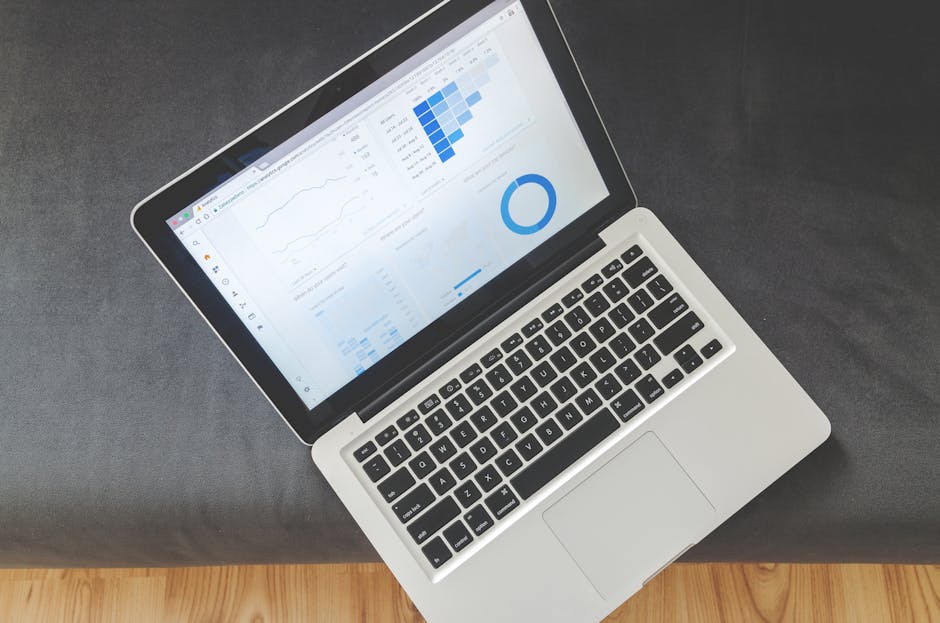
Most solopreneurs I talk to have Google Analytics installed but rarely check it. And when they do, they drown in data without actionable insight. I was the same way until I simplified my analytics stack.
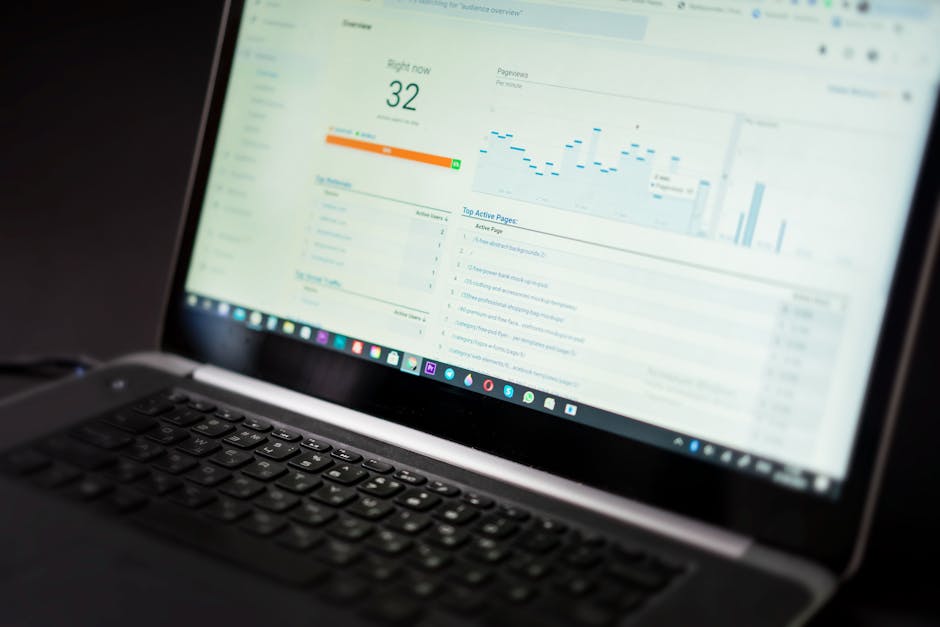
I switched from Google Analytics 4 (which felt like it needed a PhD to navigate) to Plausible Analytics for website tracking. Clean interface, no cookie consent banners needed, and I can see what matters in under 30 seconds: top traffic sources, best-performing pages, and conversion rates by channel.
For email and campaign analytics, I rely on ActiveCampaign’s built-in reporting. The AI-generated insights feature — introduced in late 2025 — summarizes campaign performance in plain language. Instead of staring at charts, I read a sentence like: “Tuesday’s campaign outperformed your 90-day average by 23%, driven primarily by the segment of buyers who purchased in the last 60 days.” That’s something I can act on immediately.
The combination that moved the needle most for my business: tracking revenue per email subscriber. Not just opens. Not just clicks. Actual dollars generated per person on my list. When I started measuring this (it took about 20 minutes to set up in ActiveCampaign), I discovered that my smallest segment — repeat buyers from Southeast Asia — generated 3x more revenue per subscriber than my largest segment. So I doubled down on content and offers for that group.
A practical tip you can apply today: set up one dashboard that shows your three most important marketing numbers. Mine are revenue per email subscriber, cost per acquisition from ads, and organic traffic to my top 5 landing pages. If you’re checking more than five metrics weekly, you’re probably overthinking it.
What I Learned After 6 Months of AI Marketing Automation
I want to be honest about this because I see too many “AI changed my life” posts that skip the messy parts.
Month one was rough. I spent more time setting up automations than actually doing marketing. The learning curve for ActiveCampaign’s automation builder took me a solid week. I broke two workflows and accidentally sent a test email to my entire list. (The subject line was “TEST IGNORE” — 14 people replied asking what they should ignore. Embarrassing.)
By month two, things started clicking. My welcome sequence was converting at 12%, up from 4% with my old manual approach. But I was also spending too much time tweaking and optimizing instead of letting the AI learn. A mentor — James Chen, a former growth lead at Shopify — told me something that stuck: “Give the algorithm 30 days before you judge it. You’re not smarter than the data.” He was right.
Months three through six were where the compounding kicked in. Each week of data made the AI smarter. Send times got more precise. Segments refined themselves. My ad creatives improved because the AI had more conversion data to learn from. After running my solo cosmetics export business for 5 years with manual marketing, I can say with confidence that AI marketing automation was the single biggest operational change I made in 2026.
The total setup took about 15 hours spread across the first month. Since then, I spend roughly 4-5 hours per week on marketing — mostly reviewing reports, adjusting strategy, and creating new offers. The AI handles the execution. For more on how I run my entire operation, see my AI automation business models breakdown.
Frequently Asked Questions
What is AI marketing automation?
AI marketing automation is the use of artificial intelligence tools to handle repetitive marketing tasks — like email segmentation, ad targeting, content scheduling, and campaign optimization — without manual intervention. Unlike traditional automation (which follows rigid if/then rules), AI-powered systems learn from your data and improve over time, making smarter decisions about who to target, when to send, and what to say.
How much does AI marketing automation cost for a solo business?
A solid AI marketing automation stack for a solo business typically costs between $100 and $300 per month. My personal stack runs at about $146/month. Free tiers exist for most tools, so you can test before committing. The ROI usually becomes positive within the first 60 days if you have an existing email list of at least 500 subscribers.
Can AI marketing automation replace a marketing hire?
For most solo businesses, yes — for the execution side. AI handles email campaigns, ad optimization, basic content generation, and analytics reporting better than a part-time hire at a fraction of the cost. Where it falls short: high-level strategy, brand positioning, and creative direction still require a human brain. Think of AI marketing automation as replacing the “doing” while you handle the “thinking.”
Which AI marketing automation tool should I start with?
Start with your email platform. Email consistently delivers the highest ROI for solo businesses (around $36 for every $1 spent, according to DMA research). Choose a platform with native AI features — ActiveCampaign, Mailchimp, or Brevo all have them. Get your email automation running smoothly before adding paid ad tools or content generation.
Start Small, Then Scale
AI marketing automation isn’t about replacing yourself as a marketer. It’s about getting your time back so you can focus on the parts of your business that actually need your brain — product development, customer relationships, and strategic decisions.
My recommendation: pick one tool from the stack above (email is the safest bet), set up your first automation this week, and give it 30 days before you judge the results. The compound effect of AI learning your audience is real, but it takes patience.
If you have questions about setting up your own AI marketing automation system, drop a comment below. I read every one.
Want more solo business strategies? Subscribe to the Nomixy newsletter for weekly insights on building a one-person business with AI.