Here’s a question that kept me up at night for two years: how do you grow a business when you’re the only person running it?
I remember sitting in my apartment in Seoul, staring at a spreadsheet full of cosmetics export orders, wondering if I’d finally hit the ceiling. My revenue was growing, but so was the chaos. Emails piling up. Invoices going out late. Social media going silent for weeks. The obvious answer — the one everyone kept telling me — was to hire. Get an assistant. Bring on a VA. Build a team.
I didn’t do any of that. And my business still doubled.
The secret wasn’t working harder or longer. It was building systems — repeatable, automated workflows that do the heavy lifting whether I’m at my desk or on a plane. Solopreneur automation changed everything for me. If you’re running a one-person business and want to grow without adding payroll, this is the guide I wish I had two years ago. I’m going to walk you through the exact automation systems I built, the tools I actually use, and the mistakes I made along the way so you don’t have to repeat them.
In This Article
- Why Solopreneur Automation Beats the Hustle Trap
- Automate Your Client Onboarding — Before You Lose Another Lead
- Content Automation That Runs While You Sleep
- Your Money on Autopilot: Invoicing and Bookkeeping Systems
- Customer Support Without a Support Team
- The "Delegate to Software" Framework for Solopreneur Automation
- How Solopreneur Automation Took Me From $35K to $100K With Zero Employees
- Frequently Asked Questions
- What Comes Next for Your Solo Business
- Keep Reading

Why Solopreneur Automation Beats the Hustle Trap
Most solo business owners fall into the same trap. Revenue goes up, so they work more hours. Then more. Pretty soon you’re pulling 14-hour days and wondering why you left your corporate job in the first place.
Paul Jarvis wrote about this in Company of One — the idea that growth doesn’t have to mean bigger. Sometimes growth means better. Real growth comes from better processes and smarter use of your time. Better margins because you’re not bleeding cash on overhead you don’t need yet.
A system is just a documented process that produces a consistent result. That’s it. Nothing fancy. When I started my cosmetics export business, my “system” for handling new orders was a sticky note on my monitor. Not great. But once I mapped out every step — from receiving the inquiry to shipping the product — I could see exactly which parts a tool could handle and which parts actually needed me.
According to a 2024 Zapier report, 94% of small business workers perform repetitive, time-consuming tasks in their role. And 90% say that automation has improved their work life. Those aren’t vanity numbers. That’s real time coming back to you.
So before you think about hiring your first employee or contractor, ask yourself: have I actually built the system yet? Building your solopreneur automation workflows first is essential, because if you haven’t, hiring just means paying someone else to do the same chaotic work you were doing — except now you have to manage them too.
Automate Your Client Onboarding — Before You Lose Another Lead
I lost a $4,000 order once because I took 48 hours to respond to an inquiry. Two days. The buyer went to a competitor. When I finally saw the email (buried under 80 others), it was too late.
That was the moment I built my first real solopreneur automation workflow. And honestly? It was embarrassingly simple.
Here’s what my onboarding system looks like now:
- Lead comes in through a form on my website (Tally — free, no-code)
- Auto-response fires within 30 seconds via Zapier, confirming I received their inquiry and setting expectations for next steps
- CRM entry created automatically in Notion with all form data populated
- Welcome packet sent through a templated email with my pricing sheet, portfolio, and FAQ doc
- Follow-up sequence triggers if no response after 3 days
The whole thing runs without me touching a single button. My response time went from 48 hours to 30 seconds, and my close rate jumped from around 25% to 40%. Not because I got better at selling — because I stopped losing leads to slow replies.
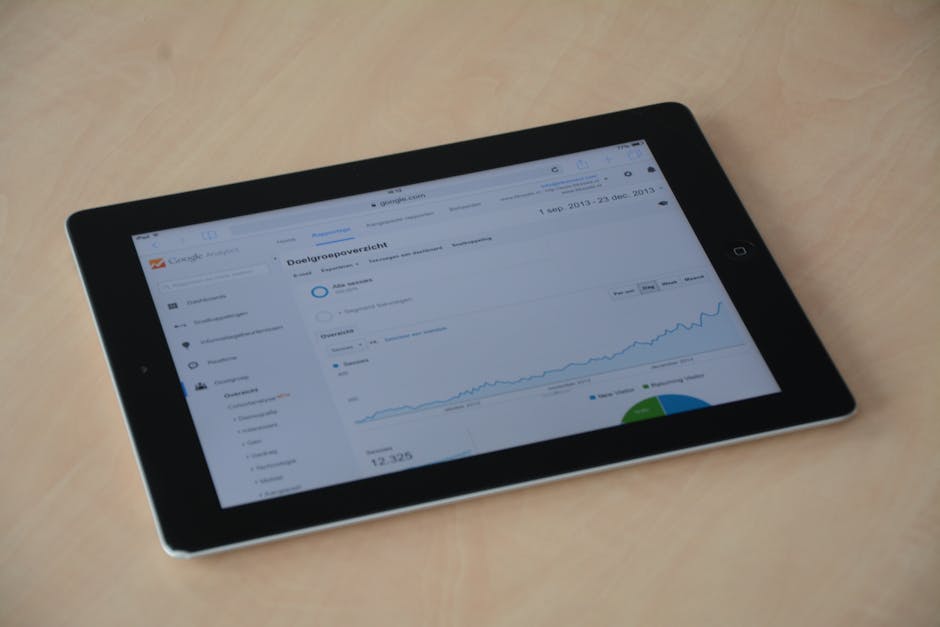
Now, I want to be honest about something. My first attempt at this was terrible. I tried using a CRM tool called Dubsado, and it was way too complex for what I needed. Spent a weekend setting it up, only to abandon it two weeks later. The lesson? Match the tool to the complexity of your business. If you’re a one-person operation handling 5-10 clients at a time, Notion or Airtable with some Zapier connections will do everything you need. You don’t need enterprise software.
Your onboarding system should answer one question: what happens between “someone finds me” and “they become a paying client”? Map that out, step by step, then figure out which steps don’t actually need you.
Content Automation That Runs While You Sleep
Content is the engine of any solopreneur’s visibility and revenue. But it’s also the first thing that falls apart when you get busy with client work. I’ve been there — three months of silence on the blog, social media accounts gathering dust, email list going cold.
The fix is batching. And I mean real batching, not just writing two posts instead of one.
My content system works in two-week cycles:
Week 1 (Content Creation — 2 days total):
- Monday: Research and outline 4 blog posts (2 hours)
- Tuesday: Write all 4 posts (6 hours total)
Week 2 (Distribution — automated):
- Posts scheduled in WordPress (I use the built-in scheduler)
- Social media versions auto-generated and queued via ChatGPT automation workflows
- Email newsletter triggers automatically when a new post publishes (n8n webhook)
That’s it. Two focused days of writing, and I have content going out for the next two weeks without thinking about it again. Before I built this system, I was spending 6-8 hours every week on content — and producing less.
One thing that surprised me: scheduling content in advance actually improved its quality. When I was writing and publishing on the same day, everything felt rushed. Batching gives you distance from your own writing. You can revisit a draft with fresh eyes before it goes live.
If you want to see how I use AI tools in this process, I wrote a detailed breakdown in my post about AI tools for solo founders. Short version: ChatGPT handles first-draft outlines and social media repurposing. I handle the thinking, the stories, and the editing. The tools save time; they don’t replace judgment.
Your Money on Autopilot: Invoicing and Bookkeeping Systems
Raise your hand if you’ve ever forgotten to send an invoice. Or sent one with the wrong amount. Or realized in April that you have zero records for the last six months of expenses.
Yeah. Me too. All of that.
My financial systems were the last thing I automated, and I regret waiting so long. The difference between chaos and clarity took about three hours to set up. Here’s my current stack:
| Task | Tool | Cost/Month | Time Saved/Week |
|---|---|---|---|
| Invoicing | Stripe (auto-invoicing) | Transaction fees only | 2 hours |
| Expense tracking | Notion + bank CSV import | Free | 1 hour |
| Recurring billing | Stripe subscriptions | Transaction fees only | 1.5 hours |
| Tax prep | Google Sheets templates | Free | 30 min |
| Payment reminders | Stripe auto-reminders | Free | 1 hour |
Total time saved: about 6 hours per week. That’s almost a full working day you get back — and the key reason financial automation matters for any solo operator.
The biggest win was switching to automatic recurring invoices. I have clients on monthly retainers, and before automation, I’d manually create and send each invoice on the 1st of the month. Sometimes the 3rd. Occasionally the 7th (sorry, clients). Now Stripe handles it all — invoice generated, sent, payment collected, receipt issued. I don’t touch it.
A mistake I made early on: I tried Wave Accounting because it was free. The interface was clunky, the reports were confusing, and I wasted more time wrestling with it than I saved. Free tools are great, but only when they actually reduce friction. If a tool creates new problems, it’s not saving you anything — it’s just a different kind of busy work.
If you’re just starting out and want to understand which numbers actually matter for your business, check out my guide on the 3 numbers every business plan needs. You don’t need a finance degree. You need three metrics and a system to track them.
Customer Support Without a Support Team
This is the one that scares most solopreneurs. “What if I can’t respond fast enough? What if customers get angry? What if I’m sleeping and someone needs help?”
Fair questions. But here’s the reality: 80% of customer support questions are the same 10 questions asked over and over. You don’t need a team for that. You need a good FAQ page and some smart routing.
My support system has three layers:
Layer 1: Self-service (handles ~60% of inquiries)
- Detailed FAQ page with search
- Knowledge base articles for common issues
- Order tracking link included in every confirmation email
Layer 2: Automated responses (handles ~20%)
- Canned responses in Gmail for common requests (refunds, shipping times, bulk pricing)
- Auto-reply during off-hours with expected response time
Layer 3: Personal response (handles ~20%)
- Complex issues, complaints, and relationship-building conversations
- These are the ones that actually need me — and because the first two layers filter everything else, I have time to give these proper attention

Before building this layered system, I was spending 2 hours every morning just on email. Now it’s about 30 minutes. And — this is important — customer satisfaction went up, not down. Because the people who actually needed a thoughtful response from me were getting one faster, instead of waiting behind 15 other emails I could have automated.
Justin Welsh, who runs a $5M+ one-person business, talks about this same principle. He calls it “building leverage” — creating assets that work even when you’re not working. Your FAQ page is an asset. Your canned responses are assets. Every time you write one, you’re saving future-you from doing the same work again.
The “Delegate to Software” Framework for Solopreneur Automation
Alright, let me give you the framework I use to decide what to automate and what to keep manual. I call it the “Delegate to Software” framework, and it’s dead simple.
For every task in your business, ask three questions:
- Is it repetitive? (Do I do this more than once a week?)
- Is it rule-based? (Can I write clear if/then instructions for it?)
- Does it need my judgment? (Would the outcome suffer if I wasn’t involved?)
If the answer is yes, yes, no — automate it. Immediately.
If the answer is yes, yes, yes — partially automate it. Let software do the repetitive parts, and you handle the judgment calls.
If it’s not repetitive or not rule-based — leave it alone. Not everything needs to be automated, and trying to automate creative or strategic work usually makes it worse, not better.
Here’s how this looks in practice:
| Task | Repetitive? | Rule-based? | Needs Judgment? | Action |
|---|---|---|---|---|
| Sending invoices | Yes | Yes | No | Fully automate |
| Writing blog posts | Yes | Partially | Yes | Partial automation (AI outline, human writing) |
| Responding to complex client issues | Sometimes | No | Yes | Keep manual |
| Social media posting | Yes | Yes | No | Fully automate |
| Product pricing decisions | No | No | Yes | Keep manual |
I’ve used this framework dozens of times, and it’s never steered me wrong. The key is being honest about column three. We all want to believe every task needs our personal touch. It doesn’t. Your business will survive — thrive, even — if an automated email goes out instead of a hand-typed one.
A 2025 McKinsey study found that solopreneurs and small business owners who adopt automation tools see an average productivity gain of 25-30%. That’s not about working faster. It’s about stopping work that doesn’t need a human brain behind it.
If you’re curious about building a no-code product as part of your solopreneur systems, I covered the full process in my no-code SaaS business guide. Same principle applies: software does the repetitive stuff, you focus on the parts that actually matter.

How Solopreneur Automation Took Me From $35K to $100K With Zero Employees
I want to get specific here, because vague success stories don’t help anyone.
I started my solo business in 2020, exporting Korean cosmetics to international buyers. The first year was pure hustle — 12-hour days, manual everything, Excel spreadsheets that looked like abstract art. My revenue was about $35,000, and I was exhausted.
Year two is when I started building systems. Not because I was smart about it — because I literally could not keep up with the workload anymore. Something had to change, or I was going to burn out and shut the whole thing down.
The first system I built was automated order confirmation. Simple. A Google Form connected to a Zapier workflow that sent a confirmation email, created a Notion database entry, and added a row to my shipping tracker spreadsheet. Took me a Saturday afternoon to set up. Saved me 45 minutes every single day.
Then I tackled invoicing (Stripe), content (WordPress scheduling + social media automation), and customer follow-ups (email sequences via Mailchimp, later switched to a simpler setup).
By year three, my revenue hit $100K. My working hours? Down to about 30 per week. Not because I worked less hard — because I stopped doing work that machines could do better.
Here’s my honest cost breakdown for the full automation stack:
- Zapier (Starter plan): $29.99/month
- Notion (free tier): $0
- WordPress hosting + domain: ~$15/month
- Email tools: ~$20/month
- Miscellaneous SaaS: ~$30/month
Total: under $100/month. Compare that to a part-time virtual assistant at $500-1500/month, or a full-time employee at $3,000+.
I’m not saying employees are bad. I’m saying you should build systems before you hire, so when (or if) you do bring someone on, they’re stepping into a well-oiled machine instead of inheriting your chaos. That’s a point I explored further in my post about why solo businesses fail in year one — most of the time, it’s not the business idea that fails. It’s the operations.
Were there failures along the way? Absolutely. I wasted $400 on a CRM I never used. I broke my Zapier automation three times in the first month because I didn’t test edge cases. I accidentally sent the same email to a client four times because of a loop in my workflow. Embarrassing? Yes. Fatal? No. Each failure taught me something about what to watch for when setting up solopreneur automation for the first time.
Frequently Asked Questions
What does it mean to scale a solo business?
Scaling a solo business means growing your revenue and output without proportionally increasing your time investment. Instead of hiring employees, you use solopreneur automation — building systems, automating repetitive tasks, and use software tools to handle operations — so your business can serve more clients or sell more products while you maintain (or even reduce) your working hours.
How much does it cost to automate a one-person business?
You can build a solid automation stack for $50-200 per month using tools like Zapier, Notion, Stripe, and WordPress. Many tools have free tiers that work fine for early-stage solopreneurs. The ROI is almost immediate — if you’re saving 10+ hours per week, that’s time you can redirect toward revenue-generating activities or, you know, having a life outside your business.
Can you really grow a business without hiring anyone?
Yes, but with a caveat. You can grow to a certain level — often $100K-500K depending on your business model — without employees. Justin Welsh and other high-profile solopreneurs have proven this. The ceiling depends on whether your business relies on your personal time (consulting) or on scalable assets (digital products, automated services). If you focus on building the right solopreneur systems, the ceiling is higher than most people think.
What’s the best first automation to set up?
Start with whatever wastes the most time. For most people, that’s either email responses or invoicing. Set up canned responses in Gmail for your top 5 most common questions — that alone can save you 30-60 minutes a day. Then move to auto-invoicing. Once you see how much time those two save, you’ll be motivated to build out the rest of your solopreneur automation stack.
What Comes Next for Your Solo Business
You don’t need a team to build something big. Not at the start, and maybe not ever. What you need are systems that work as hard as you do — and keep working when you step away.
My business runs on about $100/month in software and 30 hours a week of my time. Three years ago, I was spending twice the hours and making half the money. The difference isn’t talent or luck. It’s systems.
Start small. Pick one workflow that drives you crazy — the one you dread doing every week — and automate it this weekend. Then do another one next month. Then another. Before you know it, you’ll look back and wonder how you ever ran your business the old way.
If you want more strategies like this delivered to your inbox, join the Nomixy newsletter. I share the tools, systems, and lessons I’m learning as a solo business owner — no fluff, no theory, just what’s actually working.