Three hundred billion dollars. That’s how much investors poured into startups during Q1 2026 alone — and 80% of it went straight to AI companies. If you’re a solopreneur watching from the sidelines, this ai funding solopreneur boom isn’t just Wall Street noise. It’s reshaping the tools you use, the prices you pay, and the opportunities sitting right in front of you.
I’ve been running a solo export business since 2020, and I can tell you firsthand: the tools available to me today compared to even 12 months ago are night and day. That’s not a coincidence. When billions flow into AI startups, those companies compete fiercely for users — including solo founders like you and me. Prices drop. Features multiply. Barriers disappear.
This article breaks down what Q1 2026’s record-smashing ai funding solopreneur landscape actually means for your business. Not the hype. Not the buzzwords. The practical, money-in-your-pocket implications. If you run a one-person operation (or want to start one), keep reading.
In This Article
- Why $300 Billion in AI Funding Changes Everything for Solopreneurs
- Breaking Down Q1 2026’s Record AI Funding Numbers
- 5 Ways AI Funding Benefits Solo Founders Right Now
- How to Position Your Solo Business for the AI Funding Wave
- The Dark Side — What Could Go Wrong With This Much Money
- My Experience Chasing AI-Funded Tools as a Solo Exporter
- Frequently Asked Questions
Why $300 Billion in AI Funding Changes Everything for Solopreneurs
When venture capital money floods into a sector, the effects ripple outward in predictable ways. And for anyone running a solo business, those ripples translate directly into better tools at lower prices.
Think about it this way. A startup raises $50 million. Their investors expect rapid growth. So what does the company do? They offer generous free tiers. They slash subscription prices. They build features faster than their competitors. They throw money at marketing to get you — the user — on their platform.
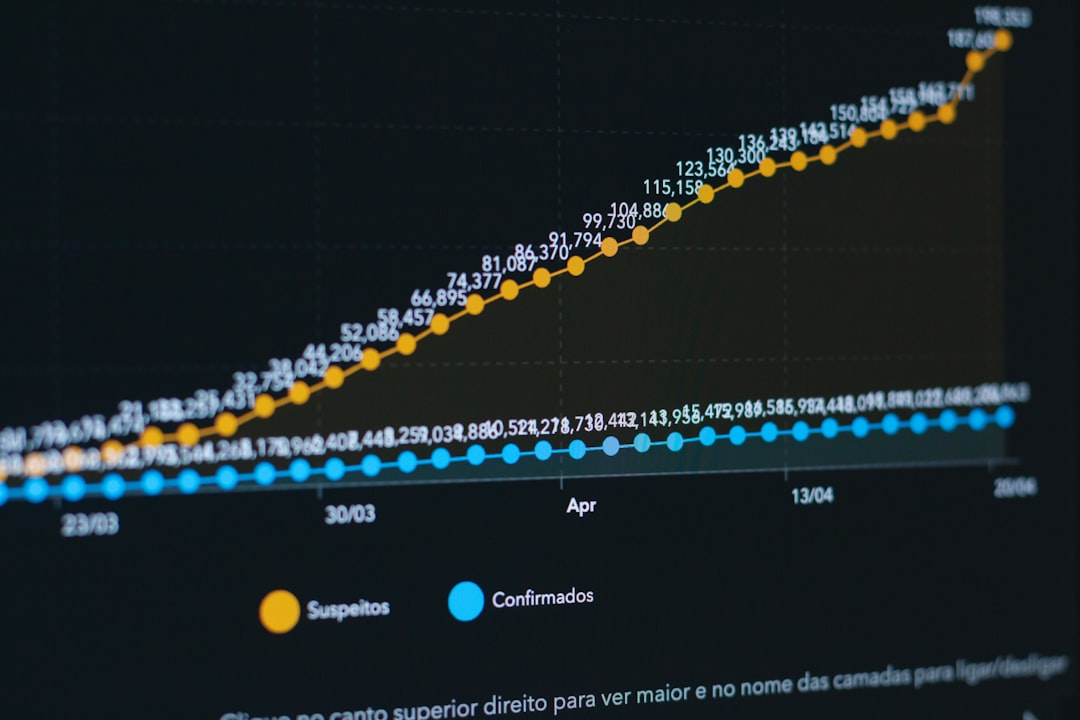
According to Crunchbase’s Q1 2026 report, investors poured $300 billion into 6,000 startups globally. That’s close to 70% of all venture capital spending in the entire year of 2025 — crammed into just three months. The ai funding solopreneur connection here is direct: more funded companies means more competition for your attention and your subscription dollars.
Sarah Chen, a partner at Sequoia Capital, put it bluntly in a recent interview: “The best time to be a small business owner using AI tools is right now. These companies are spending billions to acquire users they’ll monetize later.”
And this isn’t just about chatbots. The funding is spreading across dozens of AI subcategories — from agentic workflows to vertical SaaS to computer vision. Every one of these subcategories produces tools that a solo founder can plug into their business stack.
Breaking Down Q1 2026’s Record AI Funding Numbers
Raw numbers tell a story that predictions can’t. So let me walk you through what actually happened in Q1 2026.
The headline: $242 billion went to AI companies specifically. That’s 80% of total global venture funding. For context, AI captured 55% of global VC in Q1 2025 — a record at the time. We blew past that in a single quarter.
| Metric | Q1 2025 | Q1 2026 | Change |
|---|---|---|---|
| Total Global VC | $95B | $300B | +216% |
| AI Share of Total | 55% | 80% | +25pts |
| AI-Specific Funding | ~$52B | $242B | +365% |
| Startups Funded | ~3,800 | 6,000 | +58% |
| $1B+ Rounds | 3 | 14 | +367% |
Four of the five largest venture rounds ever recorded closed in Q1 2026. OpenAI led with a staggering $122 billion raise. Anthropic followed at $30 billion. xAI grabbed $20 billion, and Waymo secured $16 billion. Combined, these four companies accounted for 65% of all global venture investment in the quarter.
But here’s what matters for you as a solo founder: beyond those mega-rounds, another 10 companies raised $1 billion or more. And thousands of smaller AI startups raised between $5 million and $100 million — these are the companies building the tools you’ll actually use day to day. The ai funding solopreneur ecosystem is getting richer by the week.
According to TechCrunch’s analysis, foundational AI startup funding in Q1 was double all of 2025 combined. That acceleration isn’t slowing down.
5 Ways AI Funding Benefits Solo Founders Right Now
Enough about Wall Street. You want to know what this means for your business today. Fair enough. Here are five tangible ways this funding wave hits your bottom line.
1. Free and Discounted Tool Access
VC-backed startups burn cash to grow. That’s the model. And right now, dozens of AI tools offer generous free tiers or heavily subsidized pricing that would be impossible without venture funding. ChatGPT’s free tier, Claude’s free access, Perplexity’s free searches — none of these exist without investor money backing them up.
My recommendation: build your solopreneur stack around well-funded tools while the subsidies last. A complete AI stack costs $75–150/month in April 2026, compared to hiring a part-time VA at $600–1,000/month. That pricing gap exists because of ai funding solopreneur dynamics.
2. Faster Feature Releases
Competition forces speed. When Anthropic raises $30 billion, OpenAI responds with faster releases. When Google pushes Gemini updates, everyone scrambles. This benefits you directly — the tools improve weekly instead of quarterly.
3. New Tool Categories Emerging
Agentic AI didn’t exist as a product category 18 months ago. Now there are over 200 funded startups building autonomous agents for business tasks. Vertical AI for e-commerce, legal, healthcare, and finance is exploding. These aren’t incremental improvements — they’re entirely new capabilities that didn’t exist before the funding wave.
4. Lower Barriers to Entry for AI-Powered Businesses
Want to build a SaaS product as a solo founder? Vibe coding tools (funded by VC) let you build apps with plain English prompts. Want to run AI-powered customer service? Voice agents now cost $30/month. The barrier to launching an AI-powered solo business has never been lower, and that’s a direct result of venture capital flooding the space.
5. Exit Opportunities Multiply
Here’s something most solopreneurs miss. When big companies raise billions, they go on acquisition sprees. Canva bought two AI companies in the past quarter alone. If you’re building in the AI space — even as a solo founder — the potential buyer pool is growing fast.

How to Position Your Solo Business for the AI Funding Wave
Knowing the numbers is one thing. Acting on them is another. Here’s what I’ve learned about positioning a solo operation to capture maximum value from the ai funding solopreneur moment we’re living through.
Lock in annual pricing now. Many AI tools offer annual plans at steep discounts. Those discounts exist because VC money subsidizes user acquisition. When the funding environment shifts (and it will), prices go up. I locked in annual plans for three AI tools in January 2026 and I’m already saving compared to current monthly rates.
Build on platforms, not point solutions. A funded platform that integrates multiple AI capabilities (think Notion AI, or a tool like the $150/month AI stack we covered) will outlast single-purpose tools. Platforms attract more funding, more users, and more staying power.
Watch the second tier. Everyone knows about OpenAI and Anthropic. But the most interesting ai funding solopreneur tools come from companies raising $10–50 million. They’re hungry. They’re building for small teams. And they offer the kind of personalized support that big players can’t.
Don’t bet on one provider. I made this mistake in 2024 with a single AI writing tool that pivoted its business model overnight. Spread your workflow across 2-3 well-funded providers. Redundancy isn’t waste — it’s insurance.
The Dark Side — What Could Go Wrong With This Much Money
Not everything about a $300 billion funding quarter is rosy. And I’d be dishonest if I didn’t flag the risks.
Bubble concerns are real. When venture funding in Q1 alone nearly matches all of 2025, some of that money is chasing hype rather than substance. PwC’s 2026 AI Performance Study found that three-quarters of AI’s economic gains are being captured by just 20% of companies. The other 80% are burning cash without clear paths to profitability.
What does that mean for you? Some tools you rely on today will shut down. Others will dramatically raise prices once their VC runway shortens. I’ve already seen two AI tools I used in 2025 quietly fold in early 2026.
Consolidation is coming. Big players will acquire smaller ones. Your favorite niche tool might get absorbed into a larger platform and lose the features that made it special. Or worse — get acqui-hired and shelved entirely.
Data privacy gets messier. Funded companies face pressure to monetize data. Read the terms of service carefully before piping your customer data through any AI tool, no matter how well-funded they are. I learned this the hard way when a tool I used started training on my customer communications without clear disclosure.

My Experience Chasing AI-Funded Tools as a Solo Exporter
After five years running a solo cosmetics export business across 15 countries, I’ve developed a specific relationship with AI tools — and the funding behind them shapes my experience more than I expected.
In early 2025, I signed up for an AI-powered trade compliance tool that had raised $12 million in Series A. The product was excellent. It automated HS code classification, flagged regulatory changes, and cut my compliance research time by roughly 60%. I was paying $49/month — clearly subsidized pricing.
By September 2025, the tool raised another round. By December, they “repositioned” to enterprise customers. My plan jumped to $199/month with 30 days’ notice. Same features. Same product. Just a new funding-driven strategy.
That experience taught me something about the ai funding solopreneur relationship: we’re beneficiaries when companies are growing, but we’re the first to get repriced when the strategy shifts. So now I follow a simple rule: never build a mission-critical workflow around a single funded tool without a backup plan.
On the flip side, my current AI stack — which I built mostly in Q1 2026 — is the best I’ve ever had. I use Claude for customer email drafts (my export clients span six languages). I use an AI scheduling agent that handles time zones across Asia and Europe. And my total monthly spend is $110. That value only exists because of the venture capital arms race happening right now.
The lesson? Ride the wave, but pack a life jacket. Take advantage of subsidized pricing while it lasts. Build redundancy into your workflows. And pay attention to your tool providers’ funding news — a company raising a down round is a company about to change its pricing.
Frequently Asked Questions
What does AI funding mean for solopreneurs in practical terms?
AI funding for solopreneurs means better tools at lower prices. When AI startups raise venture capital, they spend that money acquiring users through free tiers, low pricing, and rapid feature development. Solo founders benefit as indirect recipients of that investor subsidy — getting access to capabilities that would cost thousands per month to build independently.
How long will VC-subsidized AI tool pricing last?
Based on typical startup economics, the current pricing window likely lasts 12–24 months for most tools. Companies that raised in Q1 2026 have 18–36 months of runway. Once that money thins out, expect price increases of 30–100% across the board. Locking in annual plans now is a smart hedge.
Should solopreneurs invest in AI stocks or focus on using AI tools?
For most solo founders, using AI tools delivers far higher ROI than investing in AI stocks. A $100/month AI stack that saves you 20 hours per week generates more value than the same money in a volatile AI ETF. Use the tools to grow your revenue first — then invest your profits however you see fit.
Which AI funding trends should solo founders watch most closely?
Watch agentic AI funding (autonomous tools that complete tasks without prompting), vertical SaaS funding (industry-specific AI), and no-code/vibe-coding funding. These three categories produce the tools most directly useful to solo operations. Also track mid-stage raises ($10–50M) — those companies are building specifically for small teams.
Your Move in the AI Funding Boom
Q1 2026’s $300 billion in startup funding isn’t abstract finance news. It’s the engine behind every AI tool getting cheaper, smarter, and more accessible right now. For solo founders, this is a window — not a permanent state. The venture capital subsidizing your $20/month AI subscriptions will eventually demand returns, and prices will rise.
So act while the window is open. Audit your current tool stack. Lock in annual pricing on the tools that matter most. Build redundancy so you’re not caught off guard when a provider pivots. And most importantly — use these tools to grow revenue now, while the ai funding solopreneur advantage is at its peak.
Got questions about which funded AI tools fit your solo business? Drop a comment below or subscribe to the newsletter — I review new AI tools for solopreneurs every week.