The numbers are staggering. Investors poured $300 billion into startups during Q1 2026 alone — and 80% of that cash went straight to AI companies. That’s not a typo. Three hundred billion dollars in just 90 days.
But here’s what most headlines skip over: seed-stage deals actually dropped by 30% during the same period. The money didn’t flow to scrappy founders building products in their apartments. It went to OpenAI ($122 billion), Anthropic ($30 billion), xAI ($20 billion), and Waymo ($16 billion). Four companies absorbed 65% of every venture dollar invested globally.
So if you’re a solo founder reading this, the real question isn’t “How do I get funded?” It’s “Do I even need to?”
I asked myself that same question back in 2019 when I launched my cosmetics export business from a tiny apartment in Seoul. Zero funding. No team. No investor deck. And after watching the ai startup funding frenzy of Q1 2026 from the sidelines, I’m more convinced than ever that bootstrapping beats chasing VCs — especially right now. This post breaks down what the record-breaking ai startup funding boom actually means for solo founders, and why the smartest ones are skipping the fundraising circus entirely.
Written for solopreneurs, freelancers, and one-person founders who want to build real businesses without giving away equity.
In This Article
- The $300 Billion AI Startup Funding Explosion, Explained
- Why 80% of That Capital Isn’t Meant for You
- 5 Reasons to Bootstrap Your Solo Business Instead
- How the AI Funding Boom Actually Creates Opportunity
- The $150/Month Bootstrap Stack That Replaces VC Money
- What I Learned Bootstrapping a Solo Export Business
- Frequently Asked Questions
The $300 Billion AI Startup Funding Explosion, Explained
According to Crunchbase’s Q1 2026 report, investors poured roughly $300 billion into 6,000 startups worldwide — a 150% jump compared to both the previous quarter and the same period last year. Nothing in venture history comes close.
AI dominated the numbers. The sector pulled in $242 billion, or about 80% of all global venture capital. Compare that to Q1 2025, when AI’s share sat at 55%. The growth curve is almost vertical.
Four of the five largest venture rounds ever recorded closed in this single quarter. OpenAI raised $122 billion (yes, billion with a B). Anthropic secured $30 billion. xAI grabbed $20 billion. Waymo took $16 billion. Together, those four deals accounted for $188 billion — 65% of all money invested in every startup on the planet during those three months.
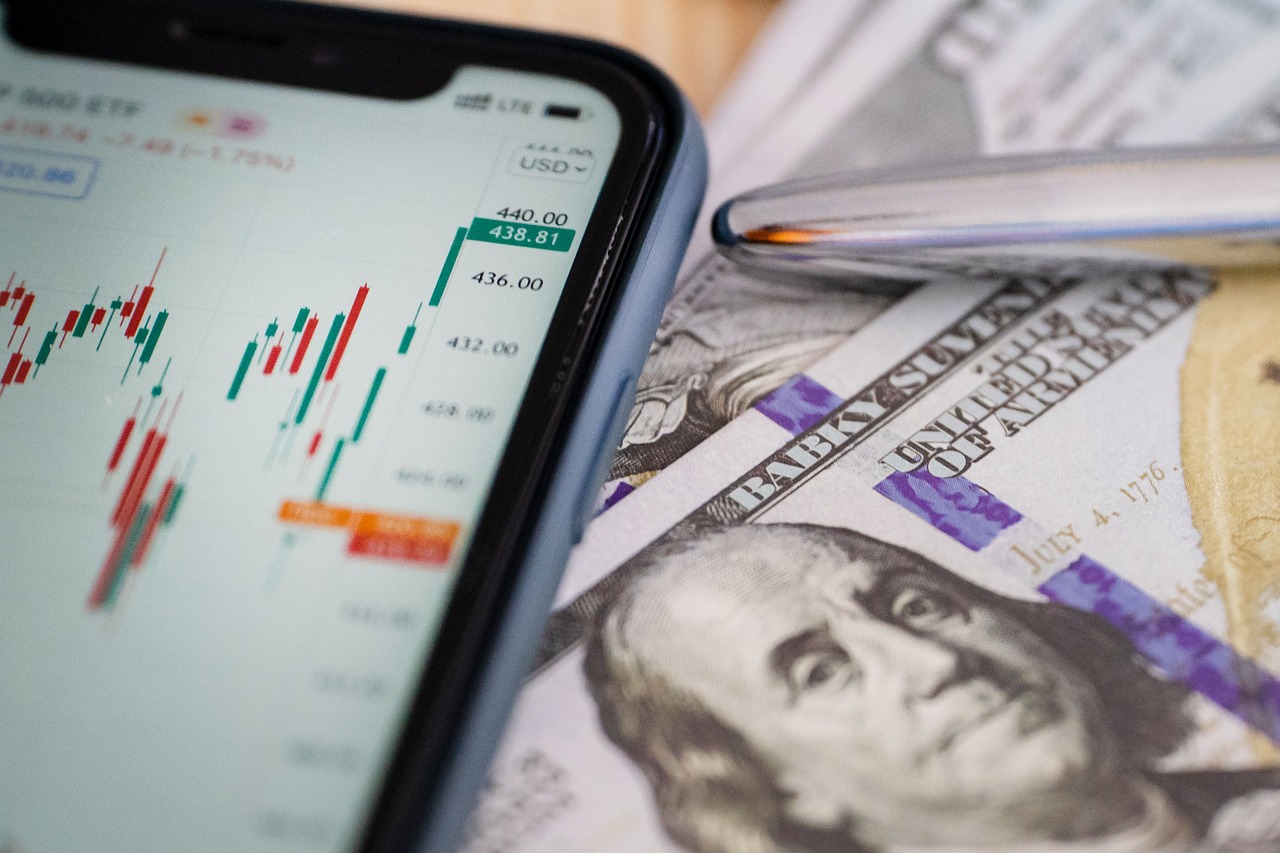
Beyond the top four, another 10 companies raised rounds above $1 billion each — spanning generative AI, autonomous vehicles, semiconductors, data centers, robotics, and defense. Foundational AI startups alone raised $178 billion across just 24 deals. For context, the entire year of 2025 saw $88.9 billion across 66 deals in the same category.
The ai startup funding wave isn’t slowing down. But the shape of it tells a very specific story: the money is concentrating at the top, not spreading across the ecosystem.
Why 80% of That Capital Isn’t Meant for You
Here’s the part that stings. While total ai startup funding smashed records, the number of seed-stage deals actually fell by around 30%. Fewer companies received checks. The ones that did got much larger checks — but almost exclusively in AI infrastructure, foundation models, and enterprise platforms.
If you’re building a SaaS product for freelancers, running a solo consulting business, or launching an e-commerce brand, you’re not competing on the same playing field as OpenAI. You’re operating in what analysts now call a “secondary capital tier.” VCs have shifted their attention, partner bandwidth, and portfolio capacity toward AI mega-deals. Your pitch deck lands in a different inbox — if it lands at all.
A PwC study released in April 2026 made this dynamic even clearer. Three-quarters of AI’s economic gains are being captured by just 20% of companies. The top performers aren’t simply more efficient — they’re focused on growth, expanding into adjacent markets while everyone else optimizes existing workflows.
Y Combinator partner Garry Tan put it bluntly in a March 2026 interview: “The era of raising $2 million on a napkin sketch is over. Investors want traction, revenue, and a clear path to $100 million ARR before they write the first check.”
That might sound discouraging. But from where I sit, it’s the most freeing news a solo founder could hear. Because if the fundraising game is rigged toward billion-dollar AI labs, then you don’t have to play it. You can build profitably from day one — and keep everything you earn.
5 Reasons to Bootstrap Your Solo Business in the AI Startup Funding Boom
The concentration of ai startup funding at the top creates a paradox. The same boom that makes VC money harder to access for small founders also makes VC money less necessary than ever before. Here’s why.
1. AI tools give you capabilities that used to require millions
Two years ago, building a product with natural language processing, image generation, or automated customer support meant hiring a machine learning team. That team alone would cost $500K-$1M per year. Today, you can access GPT-5, Claude, and Gemini through APIs for pennies per query. The ai startup funding boom built these tools — and now they’re available to anyone with a credit card.
2. You keep 100% equity and full control
Every dollar of VC money costs you ownership. A typical seed round dilutes founders by 15-25%. By Series B, many founders own less than 30% of the company they built. When you bootstrap, you own everything. Your $80K/year solo business puts more money in your pocket than a $5M funded startup where you’re drawing a modest salary and racing toward the next raise.
3. Speed kills bureaucracy
Funded startups have board meetings, investor updates, and advisory calls. You have a laptop and a decision. I once pivoted my entire product positioning on a Tuesday afternoon because a customer call revealed a better angle. Try doing that with three board members and a lead investor who wants weekly metrics.
4. Revenue-first thinking builds stronger businesses
When you can’t burn through runway, you’re forced to find paying customers fast. That constraint is a gift. It means everything you build serves a real need — because if it doesn’t, you don’t eat next month. Bootstrapped businesses have a 70% higher five-year survival rate than venture-backed ones, according to a 2025 Kauffman Foundation study.
5. The VC game is structurally rigged toward mega-rounds now
This isn’t cynicism. It’s math. When 80% of all venture funding flows to AI, and within AI the top four deals take 65%, the remaining capital is split among thousands of startups fighting for attention. Pieter Levels runs a $3M ARR portfolio of products entirely solo. He’s never raised a dime. That path is more realistic for most founders than chasing institutional money in 2026.
How the AI Funding Boom Actually Creates Opportunity
So the ai startup funding explosion isn’t directly helping you raise money. But it is helping you in a way that matters more: it’s building cheaper, better tools that replace the things funding used to buy.
Think about it. Those $242 billion in AI investment are paying thousands of engineers to build models, platforms, and APIs. The output of their work — the actual products — ends up on your screen for $20 to $50 per month. You’re benefiting from billions in R&D without writing a single investor update.

This is the “picks and shovels” play, reversed. During the Gold Rush, the real money went to people selling tools to miners. In the AI funding boom, the real advantage goes to founders who use the tools that billions built — without needing to raise billions themselves.
A 2026 survey by Indie Hackers found that solopreneurs using AI agents report average revenue increases of 340% compared to pre-agent operations, with no increase in working hours. That kind of multiplier used to require hiring a team of five or six people. Today, you just need the right stack.
And the tools keep getting cheaper. Google’s new compression algorithm, released in early 2026, reduces AI memory requirements by six times — meaning AI API costs will keep falling. The more money that flows into ai startup funding, the better and cheaper your tools become. It’s a flywheel that works in your favor even though you’re not part of the funding game.
I wrote about the specific AI stack that powers this shift in my breakdown of the $150/month AI stack behind the solo founder boom. The economics are startling when you lay them side by side with traditional hiring costs.
The $150/Month Bootstrap Stack That Replaces VC Money
If you had raised a $500K seed round in 2024, here’s roughly what you’d spend it on: two engineers ($200K), one marketer ($80K), office space ($30K), tools and infrastructure ($40K), and legal/accounting ($20K). That burns through your runway in about 14 months, and then you need to raise again.
Or you could skip all of that. In 2026, a solo founder can assemble an AI-powered stack for roughly $150/month that covers the same ground.
| Function | Traditional Cost (Annual) | AI Tool Alternative | Monthly Cost |
|---|---|---|---|
| Content & SEO | $60,000+ (freelance writer) | Claude / ChatGPT + Surfer SEO | $30 |
| Software Development | $120,000+ (junior dev) | Cursor + GitHub Copilot | $30 |
| Customer Support | $45,000+ (part-time rep) | Intercom AI / Chatbase | $25 |
| Marketing & Social | $50,000+ (marketing hire) | Jasper + Buffer AI | $40 |
| Operations & Workflow | $40,000+ (ops assistant) | Make + Lindy AI agents | $35 |
| Total | $315,000/year | Full AI stack | $160/month |
That table isn’t theoretical. I know solo founders running six-figure businesses on exactly this setup. One runs an export operation that scaled from $20K to seven figures using AI tools and zero outside funding.

The math is simple. A $500K seed round gives you 14 months of runway with a small team. The same $500K, spent $160/month on AI tools, lasts over 250 years. Obviously you have other expenses (rent, food, taxes), but the point stands: the cost of building a business has collapsed, and ai startup funding is the engine behind that collapse — even though the funding isn’t going to you directly.
What I Learned Bootstrapping a Solo Export Business
I started Cadosy — my cosmetics export company — in late 2019 with about $3,000 in savings. No investors. No co-founder. Just me, a spreadsheet, and a lot of cold emails to Korean beauty brands.
The first eight months were brutal. I made exactly $2,400 in total revenue. My “office” was a corner of my apartment with two monitors and a pile of shipping samples. I remember calculating that I was earning about $1.50 per hour when you counted all the time I spent on product research, supplier negotiations, and customs paperwork.
But not having funding forced me to think differently. Every dollar mattered. I couldn’t hire a translator, so I learned enough business Korean to negotiate directly with suppliers. I couldn’t afford a marketing agency, so I figured out SEO myself — which is why I’m writing this blog post right now, because that skill compounds.
When AI tools started becoming practical in 2023, my business changed overnight. I automated my email responses, used AI to translate product descriptions into five languages, and built a custom workflow that cut my order processing time from four hours to twenty minutes. My revenue tripled in 2024. Not because I raised money — because the tools got better and cheaper.
Here’s what I wish someone had told me in 2019: not raising money isn’t a disadvantage. It’s a filter. It forces you to build something people actually pay for, right away. And now, with AI tools subsidized by the ai startup funding boom, you have the firepower of a small team without the overhead. That combination — discipline plus tools — is what turns solo founders into real businesses.
I’ve covered more of this journey and the specific platforms that helped in my deep dive into solopreneur platforms.
Frequently Asked Questions
Is ai startup funding still available for small founders in 2026?
Technically, yes. Seed-stage venture capital still exists, and angel investors are active. But the landscape has shifted sharply. Seed deal volume dropped 30% in Q1 2026 while total funding hit records, meaning the bar for getting funded is much higher. VCs want proven traction — typically $10K+ MRR — before writing checks. For most solo founders, bootstrapping with AI tools is a faster and less dilutive path to growth.
How much does it cost to bootstrap a solo business with AI tools?
A practical AI-powered stack costs between $75 and $160 per month, depending on your needs. That covers content creation, software development assistance, customer support automation, marketing, and workflow management. You can start even cheaper — many AI tools offer free tiers that are enough to validate your idea before you commit to paid plans.
Should a solo founder ever take VC money?
There are scenarios where funding makes sense — if you’re building hardware, a marketplace that requires critical mass, or deep-tech infrastructure. But for service businesses, e-commerce, SaaS products, and content-driven companies, bootstrapping with AI tools gives you speed, ownership, and flexibility that funded competitors often lack. The question isn’t whether VC money is bad — it’s whether your specific business actually needs it.
The Bottom Line for Solo Founders
The Q1 2026 ai startup funding explosion is a signal, not an invitation. It tells you where the industry is headed — toward AI-powered everything — without requiring you to participate in the fundraising circus. The smartest solo founders I know aren’t chasing investor meetings. They’re using the tools that $300 billion in investment built, paying $150/month instead of giving away 25% of their company, and building profitable businesses on their own terms.
Your move? Stop watching the funding headlines with envy. Start building with the tools those headlines paid for. The opportunity has never been this accessible, and the cost of entry has never been this low.
Ready to build your AI-powered solo business? Subscribe to the Nomixy newsletter for weekly breakdowns of the tools, tactics, and trends that matter for one-person founders. Drop a comment below if you’re bootstrapping — I’d love to hear what stack you’re running.